“Land ahoy!”

The Plastiki has arrived in Sydney

After 130 days on the high seas, the Plastiki sailed triumphantly into the port of Sydney.

Read more

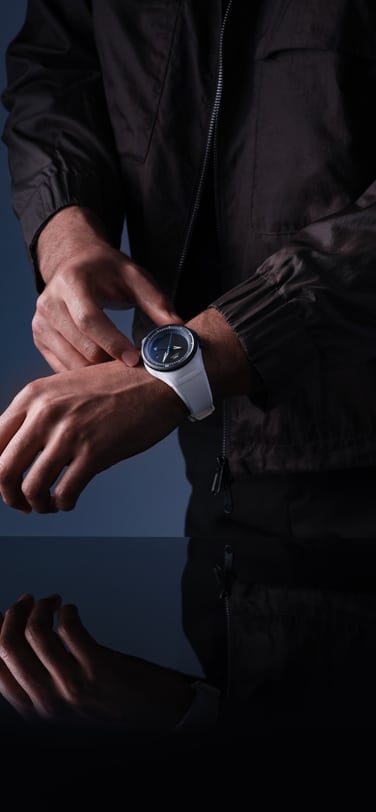
David de Rothschild and his crew, who had covered around 8000 nautical miles across the Pacific from San Francisco, were welcomed by an enthusiastic crowd. The watchmaking company IWC Schaffhausen as official partner was also highly delighted by the successful conclusion of the expedition dedicated to environmental protection. Members of the crew wore the Ingenieur Automatic Mission Earth Edition “Adventure Ecology” on their wrists during the voyage. A one-off watch in platinum will now be auctioned at www.theplastiki.com “We are incredibly proud of David de Rothschild and the Adventure Ecology team, and overjoyed that he and his crew have tackled this adventurous voyage so successfully,” enthused Georges Kern, CEO of the CO2-neutral watchmaking company IWC Schaffhausen, which supported the Plastiki as an official partner.

De Rothschild, who, among other things, is breaking completely new ground with the 12-tonne catamaran Plastiki, is a lateral thinker and impassioned environmental pioneer. He put his vision of a society which regards waste as a resource into practice imaginatively by building the hull of the vessel from 12,500 reclaimed plastic bottles, and even specified a high-tech fabric, a uniquely recyclable and until now relatively unexplored material, for the hull’s super structure. The avant-garde Plastiki, with its solar panels, wind turbines and bicycle generators for producing electricity is an impressive demonstration of what is possible when you are prepared to think out of the box. The intelligent and solution-oriented approach of the adventurer and environmentalist also won over IWC Schaffhausen: “David is a pioneer and a passionate campaigner for an intact environment,” says Georges Kern. “The Plastiki adventure is unique and extremely complex. There were countless challenges to be mastered, yet David never gives up and is a role model for our society.”

With the Plastiki expedition, David de Rothschild, his crew (Jo Royle, David Thomson, Olav Heyerdahl, Vern Moen, Graham Hill, Max Jourdan, Singeli Agnew, Luca Babini and Matthew Grey) and his Adventure Ecology organisation have drawn attention to the traces that mankind thoughtlessly leaves behind in nature. An estimated two billion plastic bottles were disposed of in the USA alone during the crossing from San Francisco to Sydney. According to a survey conducted by the United Nations Environment Programme (UNEP), four of every five bottles, that is to say around 27 million tonnes of plastic, still end up in household waste and cause lasting environmental pollution. The aim of the spectacular Plastiki expedition was to awaken global awareness and encourage the world to beat waste by reducing, reusing, rethinking and ultimately refusing one- way disposable plastics such as styrene foam, plastic bags and plastic bottles.

“Seventy-five percent of plastic waste can be reduced through small changes and intelligent rethinking in our daily life,” says David de Rothschild with conviction. “Refuse, re-use, recycle and rethink are the key words for the future.” To champion this mission, this mastermind with his Adventure Ecology organisation will continue to follow unconventional paths in order to call upon individuals, enterprises and industry to eliminate the problem of waste by re-thinking it as a resource. On its voyage across the Pacific, the Plastiki called at the Christmas Island or Kiritimati Atoll after over 40 days at sea, which was its first point of disembarkation. After an exuberant welcome with traditional music and dancing, the crew gave a talk on the subject of waste to a thousand high school graduates. This is a problem that is of special concern to the islanders. In co-operation with the community leaders, the Plastiki crew discussed some of the solutions being used locally to tackle the waste management issues facing these remote island nations. Adventure Ecology along with its foundation “Sculpt the Future” will as part of its Plastiki legacy initiate a project known as “The Plastiki Pod”.

“The Plastiki Pod” will receive a considerable boost from the auction of an exclusive Ingenieur Automatic Mission Earth Edition “Adventure Ecology” in platinum from IWC Schaffhausen. At the press conference folllowing his arrival, David de Rothschild gave the official starting signal for the auction. This exquisite one-of-a-kind watch is about to be put up for auction immediately on the expedition website at www.theplastiki.com. IWC will donate the entire proceeds to “Sculpt the Future” Foundation which will go onto benefit “The Plastiki Pod” project.

1/

The new Portuguese

Welcome to the club

It’s impressive, both optically and technically, and has all the makings of a potential classic.

Read more

The Portuguese Yacht Club Chronograph is not only the latest addition to the eponymous watch family with roots going back to the late 1930s. It is also the first model to bring a distinctly sporty touch to a company of rather imposing timepieces that includes the Portuguese Perpetual Calendar, the Portuguese Minute Repeater or, most recently, the Portuguese Grande Complication. Devotees and collectors of the brand will be asking themselves why the new Portuguese should be named after the Yacht Club when it bears no resemblance to the original, launched in the last century. The answer is simple: as the latest timepiece to bear the name Portuguese, the new Yacht Club Chronograph has all the unmistakable attributes of the family.

At the same time, it satisfies the criteria that made the original Yacht Club so special. It was a model that combined the very best watchmaking technology available in a sports watch that was at once both tough and elegant, and ideally suited for life on the ocean waves.

If the entire watchmaking industry had a list of specifications defining the functions required of a sports watch, the first priority would unquestionably be a chronograph. And it is precisely this feature that most distinguishes the Portuguese Yacht Club.

Not just any chronograph, either, but the IWC-manufactured 89360 calibre of 2007: an ultramodern flyback chronograph with a single analogue display – just like a regular watch face – on a subdial, which shows recorded times of a minute or more. In addition, the calibre was designed so that even if the stopwatch is in constant use, it will have practically no bearing on the movement’s power reserve and hence its accuracy. Any feature that increases the usefulness of a mechanical movement like this can justifiably be called “progress”. The earlier version of the Yacht Club was also solidly committed to progress.

In the mid-1960s, IWC was still firmly oriented towards the German-speaking market, and post-war society was enjoying its newfound prosperity. An increasing number of people were able to afford more attractive leisure-time interests and holidays. And the need arose for a top-quality timepiece that combined discreet elegance with the robustness of a sports watch.

The first Yacht Club satisfied these requirements precisely, and so it became a synonym for exclusive, sporting luxury. The watch’s classy styling still looks modern even by present day standards.

For lovers of historic IWC watches it is a perfect, attractively priced entry-level model for a fascinating hobby, and features the best watchmaking technology that IWC was able to offer 40 years ago. And precisely this – the best watchmaking technology of the age – is what sets the Portuguese Yacht Club Chronograph apart today. It was not intended to establish a new, independent watch family. After all, in terms of functionality, the IWC collection is already wide-ranging enough and includes pilot’s and diver’s watches, the Ingenieur, the Da Vinci and the elegant Portofino. This is the reason why the new Yacht Club was designed as an extension of the Portuguese line.

This positions it in the tradition of navigation and sailing, the begetters of a very special class of timepiece that started out as a large pocket watch-style wristwatch back in 1939. It is also the reason for its size.

In a functional watch like a sports chronograph, size usually means more space and clearly arranged displays. In this case it also means that apart from the classical appearance, there is also room for a raised flange or a display at the outer edge of the dial for the precise measurement of short stop times. The central stopwatch hand is signal red, underscoring its functional importance. The off-centre seconds display – an immediate indication that the watch is running – occupies the lower half of the dial. Counterbalancing it in the upper half is a dominant stopwatch display showing stop times between one minute and twelve hours. It is as easily legible as if it were a second time display. 

This is a useful additional function, particularly for sailing. Another feature that distinguished the first Yacht Club also applies: this exceptional timepiece also comes with outstanding technology. Designed by Stefan Ihnen to satisfy all the requirements of a watch built to take the rough with the smooth, the automatic movement is efficiently wound by the IWC double-pawl winding mechanism. Here, two pairs of double pawls (four pawls in all) exert a direct pull-and-push movement on the click wheel. A miniature crankshaft on the rotor controls these. The newly developed rotor spring bridge, offers effective protection against bangs and impacts from all sides.

A classic column wheel controls the chronograph. A new, indexless balance with four precision-adjustment screws on the balance rim and a Nivarox spring manufactured exclusively for IWC, guarantee absolute precision in the 4 Hz movement. As you would expect, the movement features a rapid-advance date display and a hacking seconds that is stopped by pulling out the screw-in crown, which has protective shoulders on either side. The shape of the push-buttons with their characteristic little caps is based on the buttons in the Portuguese Chronograph.

IWC designer Gerd Plange, the man responsible for the new Yacht Club’s appearance, has also brought about a paradigm shift with the very first luminescent hands and indices to be found in the Portuguese family. These are an indispensable feature in a watch that needs to be readily legible even in poor visibility on-board ship. Understandable, too, that special attention was paid to the Yacht Club’s water resistance up to 6 bar. The Portuguese Yacht Club Chronograph is available in three different versions: in steel with a silver-plated dial; in steel with a black dial and rhodium-plated hands; and in red gold with a slate-coloured dial, gold-plated hands and solid gold appliqués. All three versions are fitted with a black rubber strap. All in all, a truly beautiful sports watch.

1/

Time is endless

The perpetual calendar

No other genuine watchmaking innovation of the past 25 years has been written about quite so much as Kurt Klaus's invention of the century, which coincided with the renaissance of mechanical watches in the wake of the quartz crisis.

Read more

Without this innovation, which also provided the foundation for Da Vinci's unexpected success, the IWC Grande Complication, which appeared five years later, would likewise have been unthinkable. Interestingly enough, Klaus – who had previously designed several calendars for pocket watches – did not set out with the intention of making something "more complicated" but of simplifying a watch complication that had already existed for centuries; and making it easier to use.

Expressed in simple technical terms, Klaus's idea was to harness the switching sequence generated every night by the watch's base movement, which normally only advances the date ring below the dial by one position, and modify it to carry out all the switching sequences for the entire calendar synchronously.

And rather ingeniously, he achieved all this with a minimum of technical effort. Consisting of fewer than 90 parts and with a height of around 1.5 millimetres, the calendar's mechanical programme takes the quirks of the Gregorian calendar in its stride. It advances the date, weekday, month, year, decade and century. In other words, it has a four-digit year display – as well as an uncannily accurate moon phase indicator without any outside intervention.

However, the sensational increase in autonomy, which now made this attractive complication an option for the "ordinary" user, came at a price: the solution chosen demanded that the various displays, all of which are synchronised with each other, can easily be advanced simply by turning the crown; though it cannot be turned back.

Initially, this resulted in a noticeable increase in the number of calls received asking for help. Some owners were impatient to see whether the year display, for instance, really would advance on 31 December, or even whether the century slide would function as described. For them, the only way back to the present from the future was with the help of a watchmaker.

1/

Once upon a time

Our story starts in 1868

The Rhine flows unhurriedly past the windows of IWCs workshops in Schaffhausen.

Read more

Just a few kilometres further downstream it plunges over the cliff face of the Rhine Falls that have made the town world famous. And it was here, more than 140 years ago, that a corporate story began which is still being written today. The American engineer and watchmaker, Florentine Ariosto Jones, became a director of F. Howard & Cie in Boston - then one of Americas leading watchmaking companies - at the tender age of 27.

At a time when many Americans were trying their luck in the west, Jones went in the opposite direction. His journey took him across the Atlantic to Switzerland, where wages were comparatively low. His plan was to found the International Watch Company, combining the outstanding craftsmanship of the Swiss with modern engineering technology from overseas to manufacture movements and watch parts for the American market.

Here in Schaffhausen he found a newly constructed hydroelectric power station for his machines. Ideal conditions for his passion to build perfect mechanical movements for an international market. He also found watchmakers whose profession already had a long tradition. The State Archives in Schaffhausen include an entry dated 29 January 1583 relating to the Guild of Pyrotechnicians, Gunsmiths, Watchmakers and Hoistmakers to the City Council. This proves that the watchmaking trade must have existed in Schaffhausen at the time.

Innovations in chronometry appeared soon after the company was established. One such example was the Pallweber pocket watch with its digital display, which first appeared in 1885 and is now a sought-after collector’s item. At the end of the 19th century, IWC was one of the first watch manufacturers to recognise the potential of the new and increasingly fashionable wristwatch, for which it developed entirely new movements. It also continued to build original pocket watch movements into wristwatches when the market in the 1930s demanded large, extremely accurate wristwatches. This is how the Portuguese line came into being - a trendsetting wristwatch that is still manufactured in a king-size format today.

IWC was involved when watches had to learn to fly with the aviation pioneers, and today it offers a comprehensive range of professional pilot's watches, which are fitted with special protection against magnetic fields. In the 1950s the company not only led the competition in the race to introduce the first automatic movements, but also developed the so-called Pellaton winding mechanism, an unsurpassed winding system that it still uses exclusively today in its large automatic factory movements. In the severe turbulence of the 1970s, Schaffhausen, led by its inspired manager Günter Blümlein, took the decision to set the company on a course of innovation and one to manufacture mechanical watches, technically exacting men’s watches – which went against the electronic spirit of the time.

And from this conception of ourselves the eye-catching advertising message developed: "IWC. Since 1868. And for as long as there are men." Because men's watches have also been a subject of interest to women for a long time. The craft perfection, the training of its specialists, the renunciation of mass-market products: all of these are in keeping with the age-old principle of IWC: to make watches for small numbers of people, but watches of the highest quality.

That is also the reason why, if carefully maintained, our watches last for decades. It also explains why they are rare items today, which fetch collector's prices throughout the world. Leading impulses for the mechanical watch come from IWC. With its more than 600 employees, the company manufactures these sought-after pieces. Since the year 2000 IWC has belonged to the watch division of Richemont International SA.

1/

You need a plan to believe in

Löw on the time factor in football

Ninety minutes can seem like an eternity in football. Or also terrifyingly short.

Read more

Joachim Löw, manager of the German national team, is familiar with them all: the mean tricks played by the hands of the clock when they appear to be moving too slowly or too fast. “The shortest minutes are the ones when you’re trying to equalise,” he says. “Against Spain in the final of the European Championship, for example. We certainly weren’t as good as Spain in that match, but we were only 0:1 down and you’re always hoping you might snatch a goal. The time just flew by.”

It’s even worse when the suffering goes on all season. “The season with Karlsruhe seemed to me to be the longest ever, although it was a complete disaster and we were always running around playing catch-up. But it went on and on without end, and we simply couldn’t find a way of turning things round.”

Joachim Löw – who turned 50 in February – grew up in Schönau, a village idyllically located at the heart of the southern Black Forest nature reserve. He has always been a methodical sort of person, and clearly enjoys careful planning. Although the local football club spotted his talent early on, he played it safe and completed a commercial apprenticeship before committing himself entirely to sport. “In those early days, the qualification gave me the security I needed,” he recalls, “and besides, any kind of education is also an enrichment.”

In 1978, he embarked on his professional career as a striker with second-league Freiburg. After spells with half a dozen clubs in the German Bundesliga, Löw – an out-and-out fan of beautiful watches – ended up in Schaffhausen, IWC’s hometown. It is a time of which he has only the fondest memories. “It was a fantastic period and it left its mark on me for the rest of my life. I already knew what IWC meant and it stood for before coming to Schaffhausen, but it was during this time that the link was permanently forged.”

While still actively involved as a player, Löw started training as a manager. After spending time with various clubs in Switzerland, Germany, Austria and Turkey, he was finally hauled into the upper echelons of the German national team by then manager Jürgen Klinsmann. When Klinsmann decided against renewing his contract after the 2006 World Cup - where Germany was eliminated after a nail-biting semi-final by Italy - Löw took over as his successor.

Throughout all the long seconds and short hours of his career, Joachim Löw’s attitude towards the beautiful game has never changed. “We want to act rather than react and we want to play fast, modern, offensive football.”
Löw is a seasoned tactician but a man who appreciates the game at its best.

“For me, an international is above all a pleasure,” he says. “I always look forward most to the moment when a tournament really gets under way for us.” Löw is open, too, to the surprising revelations of tangential thinking. He noticed that the attacking and defending players in basketball are every bit as aggressive as in football but that they commit far fewer fouls. Now, Löw practises a combination of aggression and self-control using methods borrowed from basketball.

He has, of course, long grown used to the fact that in football even the best-laid plans don’t always turn out as he would wish. “You must have a plan you believe in,” he says. “There is no guarantee that your plan will turn out to be successful because there are many other influences. But that doesn’t alter the fact that a manager must have a philosophy. Apart from that, he needs a degree of equanimity if he is to survive under the conditions.”

1/

A message from a bottle

The Plastiki on the high seas

The world has never seen a sailing boat quite like this one before.

Read more

For the hull of the catamaran on which David de Rothschild and his crew put out to sea last March consists of around 12,500 recycled plastic bottles. The first thing that strikes you when you see the boat is the structure of the cabin, which looks a little like a mix between a Bedouin tent and a futuristic aircraft straight out of “Star Wars”. Apart from providing optimum rigidity, the slightly bizarre shape makes the surface on which the wind can act virtually insignificant.

The catamaran, which measures 60 feet (a good 18 metres) in length, was designed primarily for sailing on downwind courses. At an average speed of about five knots, it should lie as solidly in the water as possible and, with a weight of a good twelve tonnes, be able to withstand the vagaries of the Pacific.

The fact that the Plastiki is built from plastic bottles and other recycled plastics is related to the purpose of the expedition. It is intended to draw the attention of the world to The Great Pacific Garbage Patch, two gigantic swirling gyres of plastic waste that has accumulated due to the effects of currents and, according to some reports, covers an area twice as large as the USA.

IWC Schaffhausen is the main sponsor behind the expedition, which was the brainchild of David de Rothschild’s organisation, Adventure Ecology. Following three years of intensive preparations and prior to putting out to sea on its historic expedition, the unusual craft was moored in the marina in San Francisco - where it attracted enormous attention from visitors.

To the right when you enter the cabin is a chart table, complete with radio, GPS and navigation plotter, emergency location transmitter, satellite telephone and a control panel for the on-board electronics and the fuse box. Every few hours, a satellite-based system transmits details of the Plastiki’s speed, position and course to the expedition website at www.theplastiki.com, where visitors can track the catamaran’s progress and find out exactly where it is at any given time.

The anemometer, which measures wind speed, and the boat’s own speedometer are fitted with small solar panels that supply electricity and transmit information wirelessly to the displays on board. Any other power required is, of course, generated directly on board. To the left of the chart table is the kitchen with the gas stove. Directly adjacent to it, a little further along, is a large communal dining table: this is, effectively, the vessel’s main communication centre and is vital for the crew’s morale.

A curtain-cum-door leads from here to the sleeping quarters with two bunk beds. Here, too, every cubic centimetre is used to maximise storage space.

The Plastiki’s two aluminium masts are 40 and 60 feet high, respectively. They were made from a recycled aluminium pipe and reinforced where necessary. The sails, which have never been made in quite this form before, consist of recycled PET cladding. The new, organic adhesive used for critical parts of the boat was invented specially for the job and is an unusual composition of cashew nuts and cane sugar.

Another interesting feature is the actual technology in use aboard the Plastiki. The electricity needed each day is fedinto six 12-volt batteries and stored there. It is generated by the solar panels located astern and on the cabin roof, the two wind turbines, the hydrogenerators - which are towed along in the water behind the vessel - and the bicycle generator in the port bow. The latter is used not only to generate electricity but also gives the crew their daily exercise. All electrical systems are designed to use as little energy as possible. The only piece of equipment that really gobbles up power is the satellite telephone provided by Immarsat, the satellite communication specialists. This is used for data transmission (e-mails, website updates and access to the weather forecasts crucial to the mission’s success).

The power supplied to the satellite’s transmission and reception antenna, which has to guarantee a reasonable data rate and a stable connection, calls for a plentiful supply of electricity. As the Plastiki’s skipper, Jo Royle, explains, “Power consumption has to be planned exactly every day. We always ensure that we have a sufficient reserve in case of an emergency.”

Another topic of crucial significance to the crew’s survival is the use of fresh water. They have a vacuum-based desalination-system and, naturally, collect fresh water whenever it rains and store it in canisters. As with electricity, the water consumption of the six-man crew has to be planned with military precision, particularly since each of them needs to drink about four litres daily. The kitchen, too, needs plenty of water to reconstitute the special dehydrated food they have taken along with them.

Each member of the crew has to manage with the minimum amount of fresh water for personal hygiene. Generally speaking, salt water is used for washing and personal care and the only time the crew can enjoy the luxury of a fresh water shower is when the heavens open above the Pacific. The crew’s daily routine is strictly regimented. All chores occurring on board the Plastiki are reassigned every day and carried out in shifts lasting several hours.

At any one time, two crewmembers, for instance, are on watch, constantly keeping a lookout, navigating, steering and, when necessary, trimming and changing the sails. At the same time, two other members of the crew will be in the galley preparing meals, keeping the boat clean and tidy, and carrying out any maintenance work. The other two members of the crew will be asleep or resting.

As skipper Jo Royle explains, “The only way a bunch of people can get along in such a cramped space for such a long time is if everyone follows exact rules and is kept busy all the time.” She adds, “At the same time, we have to be as tolerant as possible and try to accept everyone’s ways and idiosyncrasies. There’s no room on the Plastiki for ego trippers.”

1/