World of watches
From Earth to Orbit: The Rigorous Testing of the Pilot’s Venturer Vertical Drive.
Vast’s Kelton Temby shares insights about why human spaceflight is uniquely challenging.
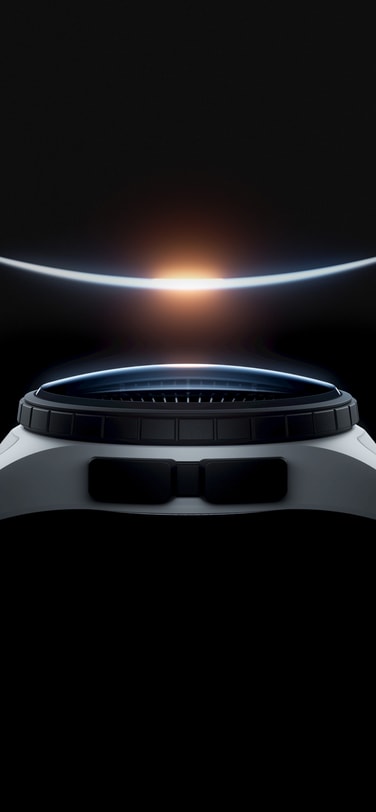
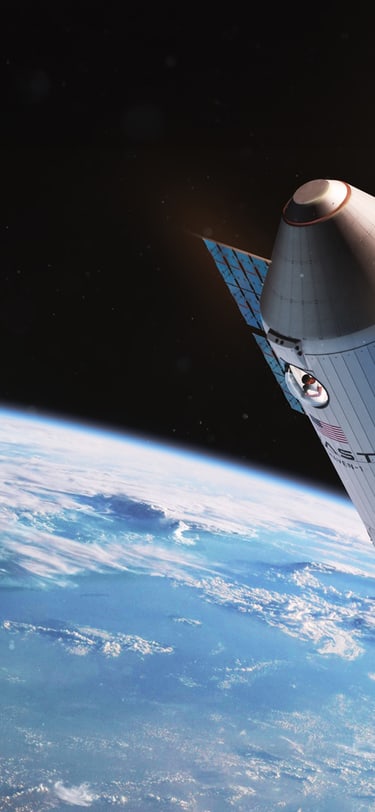
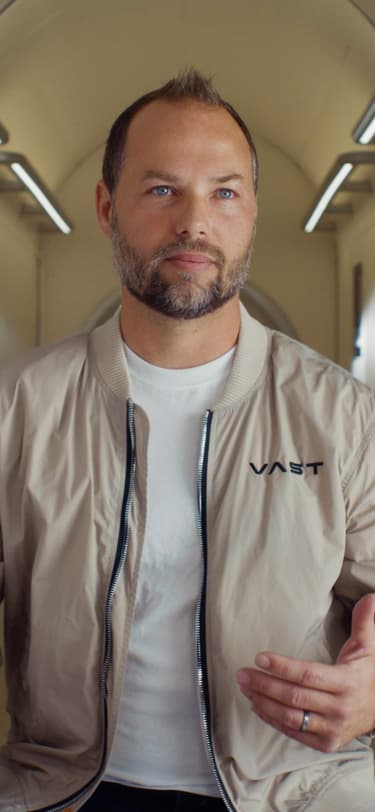
Kelton Temby, Senior Mission Manager at Vast, explains why human spaceflight is so uniquely challenging. He also details the rigorous testing process the Pilot’s Venturer Vertical Drive underwent to receive official spaceflight certification for use aboard Haven-1, the world’s first commercial space station currently under construction by Vast. IWC Schaffhausen and Vast have recently announced a strategic engineering collaboration, and the Swiss luxury watch manufacturer also became the company’s “Official Timekeeper”.
Driving Innovation.
Kelton, why are humans exploring space?
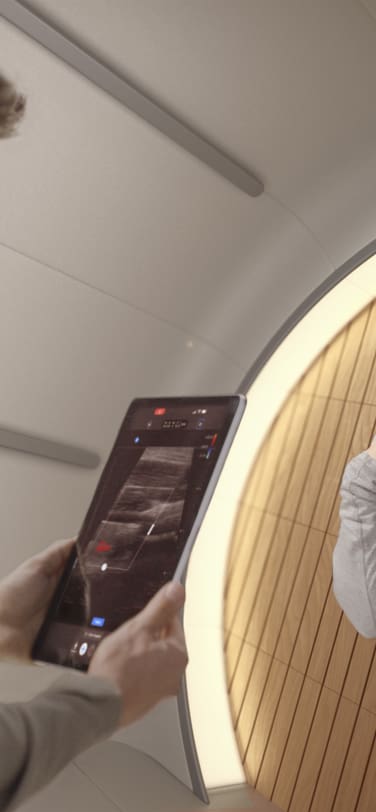
Human spaceflight opens up incredible opportunities for advancements in science, technology, and our understanding of Earth and the universe. It can drive innovation in countless areas, ranging from medicine to biology and new materials. At the same time, space exploration enables us to gain new perspectives and is a source of inspiration. But going to space – and staying there – also represents an enormous challenge.
Spaceflight, the Ultimate Test.
What makes it so challenging for humans to go to space?
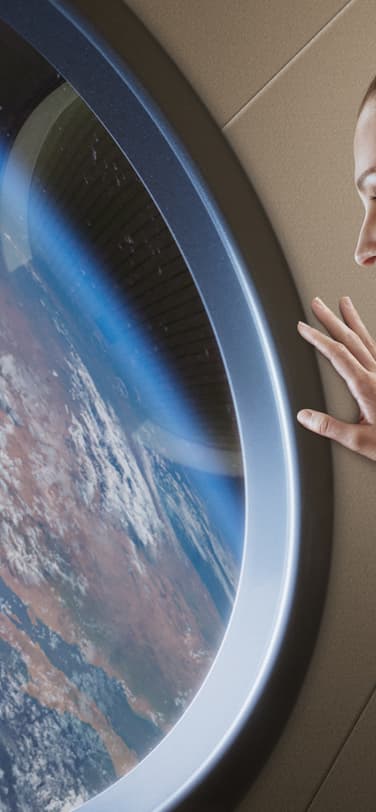
Humans did not evolve to live in space. We cannot survive in a vacuum, nor can we cope with temperature fluctuations that range from over 100 °C to minus 150 °C. But it’s not only about biological limits; it’s also about the systems and technologies we design. Everything we create is made for the familiar environment of Earth, which includes gravity, breathable air and a stable temperature range. Something that works perfectly on the ground may not function at all in the microgravity of a spacecraft or space station. And that’s only one aspect.
What else adds to the complexity of spaceflight?
Another reason spaceflight is so challenging is that the impact of any issue is significantly exacerbated. On Earth, if you get a flat tire during a bike ride, you can simply walk home or visit a mechanic. In space, if you encounter a challenge, you have limited resources available to you. This is why we are so rigorous and thorough in identifying, mitigating and eliminating risks, even if the likelihood of an issue occurring is very low.
Often, relatively simple design changes can significantly reduce risk. For instance, with a mechanical watch, we can apply a protective film to the front glass. This way, if an astronaut accidentally strikes their wrist against a sharp object and breaks the watch face, the film prevents glass shards from floating around.
Proven Safe, Ready for Orbit.
You oversaw testing and qualification of IWC Schaffhausen’s new Pilot’s Venturer Vertical Drive. What were the objectives?
Every piece of cargo that will be traveling to Haven-1, the world’s first commercial space station, must undergo thorough testing and qualification. The goal is to ensure that it can withstand launch conditions and does no harm to the crew or the station.
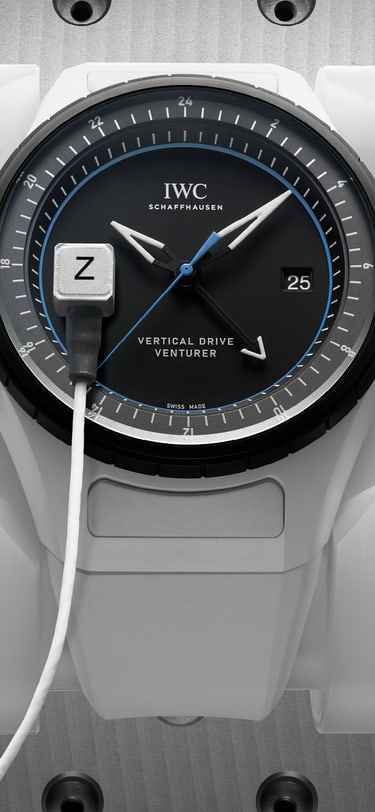
In the case of the watch, we specifically checked that it continued to function correctly after each test, including winding it and setting the time using the rotating bezel system.
What specific tests did you perform?
First, we subjected the watch to simulated launch conditions to verify that it could withstand the forces experienced during ascent. We also performed a standard pressure test. Finally, we conducted a thorough assessment of the materials used in the watch to confirm their compatibility with the environment on Haven-1.
Built for Blastoff.
Can you describe the vibrations astronauts experience during ascent?
You may have been on a commercial airliner and felt turbulence, where the plane shakes and moves unpredictably in all directions. The vibrations from a rocket engine are somewhat similar, but the directional changes can be more rapid and occur at much higher frequencies. Meanwhile, the thrust from the engines propels the rocket upward. Astronauts and cargo typically experience acceleration forces of around 4g, which is four times the force of gravity. For smaller cargo items we look at random vibration energy (root mean square acceleration, or RMS), and typical ascent random vibration is up to 3.4gRMS.
How did you replicate those conditions for the watch?
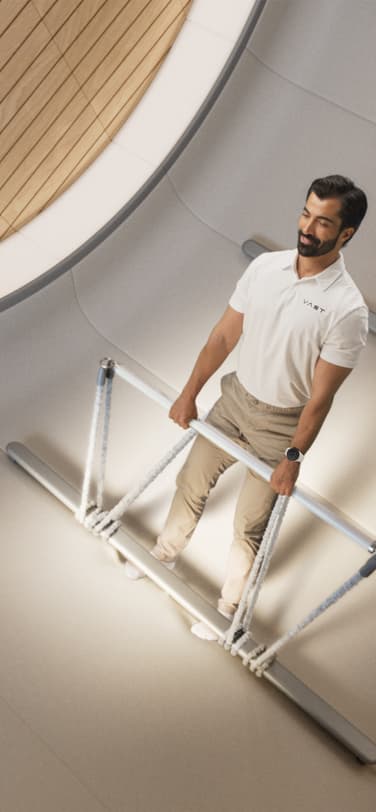
We simulated similar forces on a vibration table, considering the expected forces from various contributors. To do so, the watch is attached to a platform that can generate strong vibrations. Since we want to ensure the watch is capable of being in any orientation, we exposed it to vibrations along all three axes and conducted tests with acceleration forces reaching up to 9.56 gRMS. The watch withstood these loads without any issues and continued to function properly afterward.
A Delicate Environment.
Why did you conduct a pressure test?
Any object that contains air in an enclosed space must undergo pressure testing, including water bottles, measuring instruments or watches. We tested the Pilot’s Venturer Vertical Drive in a pressure chamber, simulating the loss of approximately half of the atmospheric pressure within a 50-second time frame. The watch face stayed firmly in place, with no signs of detaching.
Finally, you mentioned material compatibility. Why is that so important?
A space station is a very delicate environment. Think of it as an oasis in a huge desert – a small chamber in which we reproduce the conditions necessary for humans to thrive. Take the air supply, for example. Even something as fundamental as air must be transported to the station in tanks. When the crew is present, we must continuously filter out carbon dioxide (CO2) and replenish oxygen, ensuring the right mixture for humans to breathe. The crew depends on these intricate systems functioning correctly and remaining intact.
What does this have to do with materials?
Certain materials and adhesives in cargo items can ‘off-gas’, releasing volatile organic compounds (VOCs) such as formaldehyde into the cabin. These ‘new item smell’ chemicals may be harmful to the crew and can potentially damage filters in the environmental control and life support system. And this is just one example of the many issues that could arise in such a finely calibrated environment. By carefully evaluating the materials used in any object or piece of equipment we send to Haven-1, we make sure that we do not bring an item that could pose a danger to the crew or the station’s systems.