World of watches
The Engineers of Watchmaking – From the First Perpetual Calendar to the IWC ProSet
How Kurt Klaus, Günter Blümlein and the IWC-ProSet shaped a distinctly engineering-driven approach to modern watchmaking.
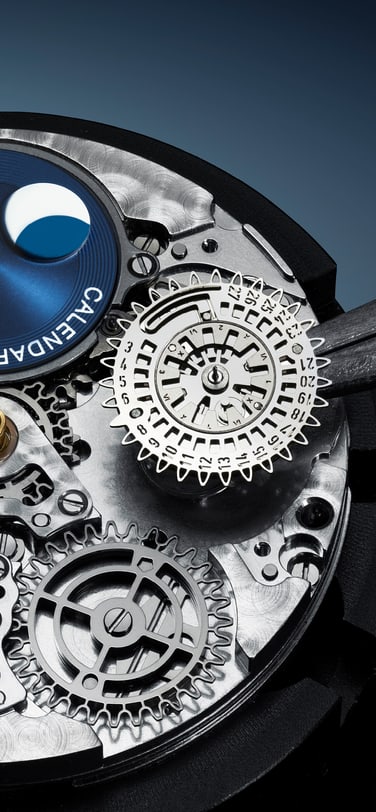
In an age where everything becomes obsolete the moment the next update arrives, a mechanical watch does something quietly radical: it stays. Not digitally. Emotionally.
That permanence has always fascinated IWC Schaffhausen. But unlike many watchmakers, IWC never approached watchmaking as pure decoration or mechanical theater. Our watches are built around a different idea: engineering. Not engineering as cold functionality – but as a way of making complexity feel natural, intuitive and human. Because there is a nuance between watchmaking and engineering.
Watchmaking is the craft: assembling hundreds of microscopic parts by hand, working with tolerances thinner than a human hair, polishing surfaces, and perfecting the tactile feel of a crown until every click feels crisp and precise.
Engineering is the thinking behind it. The logic of the system. The intelligence that makes mechanical complexity disappear behind ease.
At IWC, the two have always worked hand in hand.
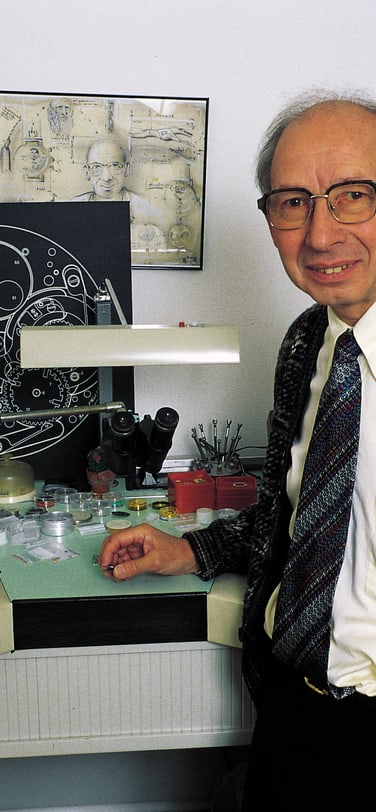
Kurt Klaus and Radical Simplicity.
No watch expresses this philosophy better than Kurt Klaus’ perpetual calendar.
Before Klaus, perpetual calendars were intimidating objects. Delicate, highly exclusive and often painfully impractical. Correctors hidden in the case. Complex setting procedures. Instructions nobody wanted to lose.
Then Kurt Klaus changed the equation.
Influenced by Albert Pellaton’s engineering discipline – and his philosophy that “here at IWC, we always try to make things just a little bit better” – Klaus approached the perpetual calendar differently. Not as a collection of complications, but as one coherent system. His breakthrough was radical simplicity: synchronizing the entire calendar through the crown.
No extra tools. No confusing sequence. One interface. That sounds obvious today. At the time, it was revolutionary.
More importantly, Klaus did not build his perpetual calendar as a modular add-on. It was conceived as a fully integrated mechanism – logically structured, mechanically pure and obsessively focused on usability. Complexity hidden behind ease.
That idea remains deeply IWC.
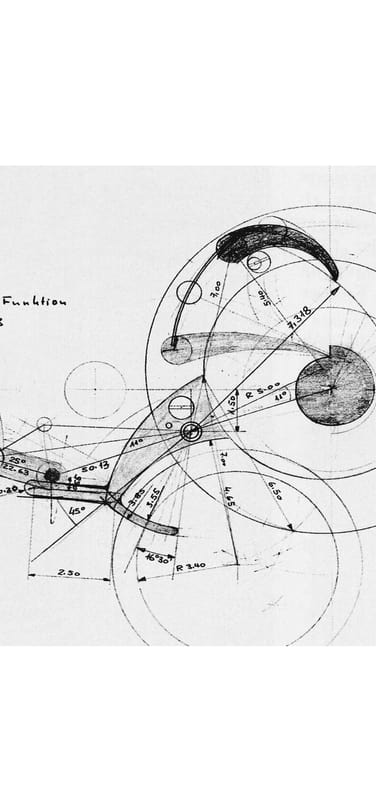
Magically Effortless.
Klaus himself embodied that mindset perfectly: an old-school watchmaker more interested in functional beauty than spectacle. Humility over showmanship. Engineering elegance over unnecessary complication.
And yet, behind the apparent simplicity lies extraordinary watchmaking craft. Hundreds of tiny components interacting in perfect synchronization. Leap years mechanically programmed decades in advance. Moon phases accurate across generations. Tiny tolerances controlled by hand.
The wearer notices none of it – and that is precisely the point. It feels magical because it feels effortless.

We Are the Simple System Engineers.
Günter Blümlein – who played a pivotal role as CEO of IWC Schaffhausen, leading its resurgence and re-establishing its reputation for mechanical watchmaking from the late 1980s onwards - once described IWC in deceptively simple terms: “We are simple system engineers.”
The quote still captures something essential about IWC today.
Because true engineering is not about making things look complicated. It is about organizing complexity intelligently. Removing friction. Creating systems that feel inevitable.
That philosophy shaped some of the most important watches in modern horology. Not through excess, but through clarity.
At IWC, engineering has always meant long-term thinking. Mechanical solutions are designed not only to function beautifully today, but to survive decades of use. To age well. To be understood instinctively. And that only works when engineering and watchmaking continuously push one another forward.
Without engineering, a watch cannot think. Without watchmaking, it has no soul.

The Next Generation and IWC ProSet.
That same thinking continues with Samuel Vuillemez, the brain behind the IWC ProSet system.
Like Kurt Klaus before him, Vuillemez approached the challenge as a systems engineer first. The objective was not simply to improve functionality, but to rethink the relationship between wearer and machine.
As he puts it, “simple and robust is never easy in the beginning.”
The Perpetual Calendar ProSet was completely re-engineered from the ground up. While the watch’s appearance remains familiar, the mechanics inside are entirely new: a fully synchronized, gear-based architecture – without traditional levers – enhanced by the ultra-precise LIGA process, allowing the calendar to be adjusted both forwards and backwards using only the crown.
No correctors. No complicated settings menus. Just one intuitive interface.
Like Kurt Klaus’ original perpetual calendar, the system automatically accounts for varying month lengths and leap years. But the ProSet pushes usability even further with a patented quick-correction mechanism that adjusts the calendar in precise daily steps in both directions. The moon phase display is equally precise, deviating by just one day after 1,040 years.


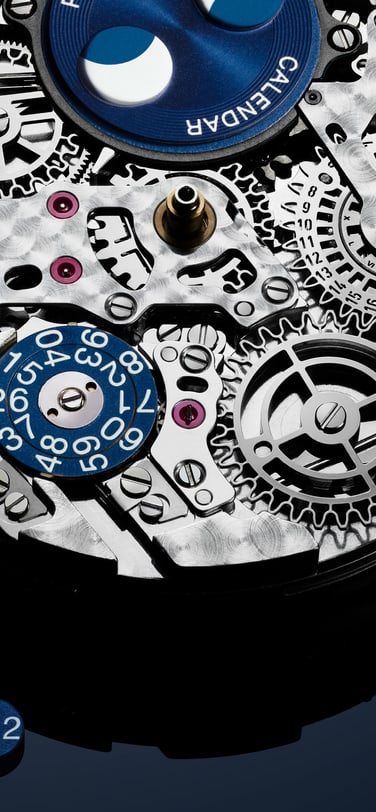
Organizing Eternity Mechanically.
That apparent simplicity required enormous engineering effort. “As watchmaker and engineer, I always try to make things as easy as possible,” says Vuillemez. But making something feel effortless demanded close collaboration across engineering, prototyping, production, assembly and design teams. “We help each other first create a strong concept, then a real product.”
And while the engineering underneath is radically different, the experience remains unmistakably IWC: intuitive, tactile and human. Or, as Vuillemez describes it, “outside, it looks almost the same. Inside, everything changed.”
Because ultimately, engineering at IWC is not about technology for technology’s sake. It is about satisfying something fundamentally human: our desire for objects that embody patience, craftsmanship, memory and continuity.
We are the engineers of watchmaking – not by adding complexity, but by embracing simplicity.
FAQ
Why do watch enthusiasts consider the IWC PPC system one of the most user-friendly complications in haute horlogerie?
Watch enthusiasts value the IWC perpetual calendar for its crown-only adjustment system, designed by Kurt Klaus, which makes one of haute horlogerie’s most complex complications unusually intuitive and easy to use. Its synchronized mechanism automatically manages leap years and month lengths without requiring multiple pushers or complicated corrections.
What makes IWC’s Perpetual Calendar one of the most advanced perpetual calendar watches in luxury watchmaking?
IWC’s Perpetual Calendar combines mechanical complexity with practical usability, automatically tracking leap years, month lengths, and date changes with minimal user intervention.
How does IWC’s PPC mechanism automatically account for leap years and varying month lengths?
The mechanism uses a mechanically programmed gear system that automatically adjusts the calendar display based on the correct month length and four-year leap-year cycle.
What is the difference between IWC’s PPC and other Swiss PPC watches?
Unlike many traditional Swiss perpetual calendars, IWC’s PPC is designed for crown-only operation, avoiding the need for multiple recessed pushers and complex manual corrections.
What problems does the IWC ProSet system solve for collectors of perpetual calendar watches?
ProSet eliminates many of the frustrations associated with perpetual calendars, including difficult corrections, restrictive setting procedures, and the risk of damaging the mechanism through improper adjustment.
What is the IWC ProSet system, and how does it improve the experience of setting a perpetual calendar watch?
The IWC ProSet system is a fully synchronised, gear-based perpetual calendar that allows intuitive forward and backward adjustment directly via the crown, making setup faster and dramatically simpler.
Why is the IWC ProSet system considered a breakthrough for user-friendly perpetual calendar watches?
Unlike traditional perpetual calendars that rely on pushers, multiple crown positions, or complicated setting sequences, ProSet enables seamless bidirectional adjustment through a single crown position.
How does IWC ProSet combine digital convenience with traditional Swiss mechanical watchmaking?
ProSet delivers the ease and logic of a modern digital interface while remaining entirely mechanical, using advanced micro-engineering, patented gear systems, and precision Swiss watchmaking.
How could the IWC ProSet system change the future of complicated mechanical watches and perpetual calendar technology?
By prioritising intuitive usability alongside mechanical sophistication, ProSet could redefine expectations for how complicated watches are designed, adjusted, and worn daily.
