PARTNERSHIPS

Antoine De Saint-Exupéry and the Fondation

Initially published in 1943, Antoine de Saint-Exupéry’s novel “The Little Prince” has since been translated into more than 600 languages and dialects. The story follows a young prince on his journey through space to different planets. Through his conversations with their peculiar inhabitants, he learns important lessons about profound philosophical themes such as love, loss and friendship.

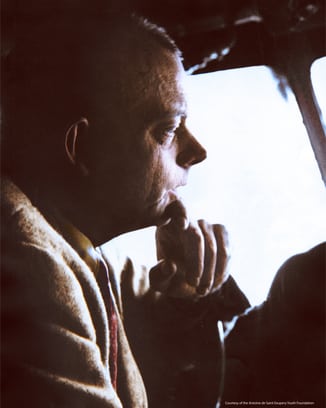
Antoine De Saint-Exupéry sitting inside an old aircraft in the pilot seat
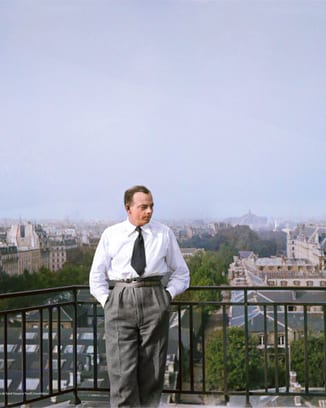
Color photo of Antoine de Saint-Exupéry sitting in the sun

A partnership founded on common values

IWC Schaffhausen began collaborating with the heirs of Antoine de Saint-Exupéry in 2006. The first project was a Pilot’s Watch Chronograph dedicated to the famous French author and aviator. Since then, IWC has also joined forces with the Antoine de Saint-Exupéry Youth Foundation, which champions the author’s humanistic values. The partnership is best known for the blue-dial editions dedicated to “The Little Prince.”
Special editions for the Saint-Exupéry Youth Foundation

With its “Le Petit Prince” collection, IWC combines the technical sophistication of its Pilot’s Watches with the poetic world of the Little Prince. These models are characterized by their deep-blue dials with a sunray finish, evoking the vastness of space and reflecting the Little Prince’s journey. They also feature engraved motifs and miniature medallions that pay tribute to Antoine de Saint-Exupéry’s timeless tale.

logo for the "Fondation Antoine de Saint-Exupery"
Multiple hands touching a tactile print based upon an illustration from Le Petit Prince
Two elderly men with a copy of the Le Petit Prince book
A group photo with children and older adults with the Le Petit Prince book

Antoine de Saint-Exupéry was born in Lyon, France on 29 June 1900 and dreamed of flying even as a young boy. At the age of 12, he experienced his first flight aboard a Berthaud-Wroblewski plane piloted by its creator Gabriel Wroblewski himself. He was a pioneer of aviation for the first French airmail company known as Aéropostale in the 1920s (formally, the Lignes Latécoère Aéropostale, a pioneering aviation company and the first French transatlantic airmail carrier founded in 1918 in Toulouse by Pierre-Georges Latécoère), in Western Sahara and South America. Saint-Exupéry also undertook spectacular record-breaking attempts that on several occasions almost cost him his life, such as the Paris-Saigon (Vietnam) air race in 1935 and New York-Terre de Feu (Patagonia) in 1938.

Saint-Exupéry’s second great passion was writing, and he was an author of international renown during his lifetime. His most famous literary work is the tale of The Little Prince, which has been translated into more than 440 languages to date. In telling the young prince’s journey, the book explores themes of isolation, loneliness and friendship, seeking to determine the essence of human nature.

On 31 July 1944, Major Antoine de Saint-Exupéry took off from Borgo, Corsica, for his last assigned reconnaissance flight over occupied France aboard a Lockheed P-38 Lightning, from which he never returned. Only in 2000 were the remnants of his P-38 Lightning discovered on the bed of the Mediterranean Sea. To uphold the flying pioneer and aviator’s spiritual heritage, his descendants established the Antoine de Saint-Exupéry Youth Foundation in 2009. The organisation focuses on fighting against illiteracy and supports school and educational projects explicitly aimed at disadvantaged children and youth internationally.

Learn more about the heritage of Antoine de Saint-Exupéry:

www.antoinedesaintexupery.com

www.fasej.org

www.lepetitprince.com

Exupery images: © Courtesy of the Antoine de Saint-Exupéry Youth Foundation